


Neck Tan vs Neck Pigmentation: What’s the Difference?
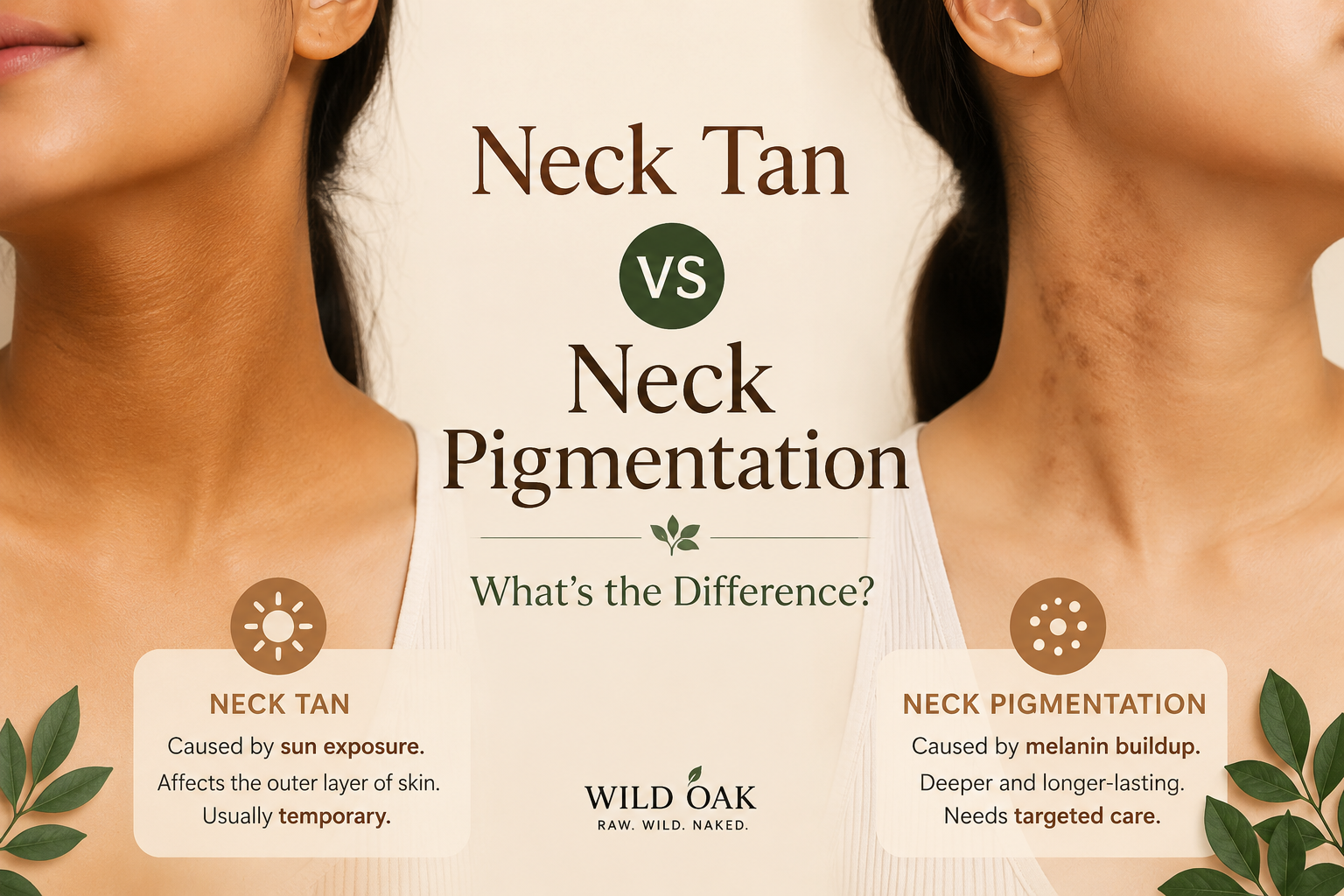
Neck darkness isn’t always the same thing. On Indian skin, neck tan from the sun and neck pigmentation from deeper causes can look similar at first glance—but they behave differently, need different treatments, and sometimes call for a dermatologist, not just a brightening soap.
Neck tan is usually surface-level and driven by UV exposure, while persistent or thickened neck pigmentation can be linked to friction, post‑inflammatory marks, or conditions like acanthosis nigricans.
Neck Tan vs Neck Pigmentation
Neck tan is mostly about sun exposure. When the back or sides of your neck get more UV than your face or body, melanin rises to protect the skin, making the area look darker compared to the rest of your tone. This is common in drivers, riders, and anyone who forgets that sunscreen needs to go on the neck too, not just the face.
Neck pigmentation, on the other hand, is a broader term. It can be:
-Post‑inflammatory hyperpigmentation after irritation, rashes, or friction.
-Hormone‑linked or insulin‑linked darkening in metabolic conditions (like acanthosis nigricans).
-Chronic sun damage plus thickening or texture changes over time.
The key point: tan tends to be more uniform and sun-patterned, while pigmentation can look patchy, velvety, and deeper, sometimes with underlying health drivers.

Kojic Acid Brightening Body Wash - Wildoak
How To Tell If It’s Just Neck Tan
Neck tan is more likely when:
You spend a lot of time outdoors, driving, or riding with your neck exposed.
The darkening is mostly on the exposed back/sides of the neck, following a clear “sunline.”
The skin texture feels normal—no velvety thickening or sudden change.
The colour difference is mild to moderate and improves gradually with exfoliation and brightening products.
Guides on neck tan removal emphasise that regular exfoliation, brightening body washes, and strict sun protection are usually enough to handle this type of darkening.

5% Benzoyl Peroxide Acne Wash for Face & Body- Clears Body Acne Fast
Signs It May Be Deeper Neck Pigmentation
Neck pigmentation deserves more attention when you see:
-Velvety, thickened, or “dirty-looking” patches rather than simple tan.
-Dark bands around the front or sides of the neck, not only the sun‑exposed back.
-Pigmentation also appearing in underarms, groin, or other folds.
-Sudden onset or rapid worsening without clear sun exposure.
Dermatology sources repeatedly link these patterns to conditions like acanthosis nigricans, hormonal influences, or metabolic factors, and recommend medical work‑up rather than just skincare.
If the neck skin looks and feels very different from the rest of your body and is not improving with basic brightening care, it’s time to talk to a doctor.
Treating Neck Tan: Safe, Surface-Level Fixes
For neck tan, the aim is to lift surface dullness and prevent further tanning, not to aggressively bleach. Practical guides and WildOak’s own content align on a few simple steps:
1. Gentle exfoliation
Once or twice a week, use a mild body scrub or exfoliating glove on the neck (never harsh scrubs).
2. Brightening body wash / soap
Use a kojic‑based brightening body wash or soap on the neck and upper back, letting the lather sit briefly before rinsing.

Kojic Acid & Alpha Arbutin Soap for Dark Spots & Hyperpigmentation - Pack of 3
WildOak’s tan-removal routine suggests applying a Kojic Acid Brightening Body Wash on wet skin, massaging for 30–45 seconds, and letting actives sit for a moment before rinsing.
3. Daily moisturiser
Apply a light body lotion with niacinamide, ceramides or vitamin E to support the barrier and avoid dryness‑related dullness.
4. Sunscreen on the neck (non‑negotiable)
Experts consistently stress that sunscreen must go on the neck as well; otherwise, any brightening will keep getting undone by new UV damage.
Over weeks, neck tan usually responds well to this combination: exfoliation, brightening wash, moisturiser, and consistent SPF.
Treating Neck Pigmentation: When Skincare Helps
For milder neck pigmentation (without thickening or systemic signs), topical routines can still make a difference. WildOak’s Dark Neck Treatment in India article outlines a simple morning‑evening plan:
Morning:
-Clean neck with a gentle brightening soap (for example, a kojic acid bar).
-Apply a lightweight niacinamide-based gel moisturiser.
-Apply sunscreen on the neck.
Evening:
-Cleanse again with the soap or body wash.
-Use a calming gel or moisturiser with brightening ingredients.
Brightening actives like niacinamide, kojic acid, mandelic/lactic acid, alpha arbutin, and licorice can help with cosmetic pigmentation when used carefully, on healthy skin, and not all at once in high concentration.
Skincare guides also suggest:
-Keeping cleansers fragrance‑free and non-stripping.
-Exfoliating gently, not with harsh scrubs.
-Watching for irritation and backing off if redness or burning appears.

7% AHA BHA Glycolic Acid Exfoliating Peeling Face Serum - Great for Beginners
When Neck Pigmentation Needs a Dermatologist
Several sources emphasise that not all dark neck is a skincare problem. Persistent, sudden, or thickened pigmentation, especially alongside other symptoms, may need medical diagnosis and treatments such as prescription creams, peels, or laser toning.
Dermatology clinics mention:
-Topical retinoids, lactic/glycolic acid, or depigmenting creams for acanthosis‑type dark neck.
-Chemical peels and laser toning for deeper or more resistant pigmentation.
-Weight management, hormone and insulin checks when neck changes link to metabolic concerns.
If the neck looks significantly darker, velvety, and is not just about sun exposure, self‑treatment with over‑the‑counter products may be insufficient and sometimes risky, especially with strong actives.
Simple Rule of Thumb for Readers
For a WildOak-style blog, you can give readers an easy way to decide:
If the darkening is mostly on the back/sides of the neck, flat in texture, and obviously sun‑linked, treat it as neck tan: exfoliate, brighten gently, and use sunscreen.
If the darkening is band‑like, velvety, spreading, or also on underarms/groin, treat it as possible neck pigmentation with deeper cause: use gentle skincare, but speak to a dermatologist.


