


Can You Use Face Actives on the Body? Vitamin C, Niacinamide and Acids Below the Neck
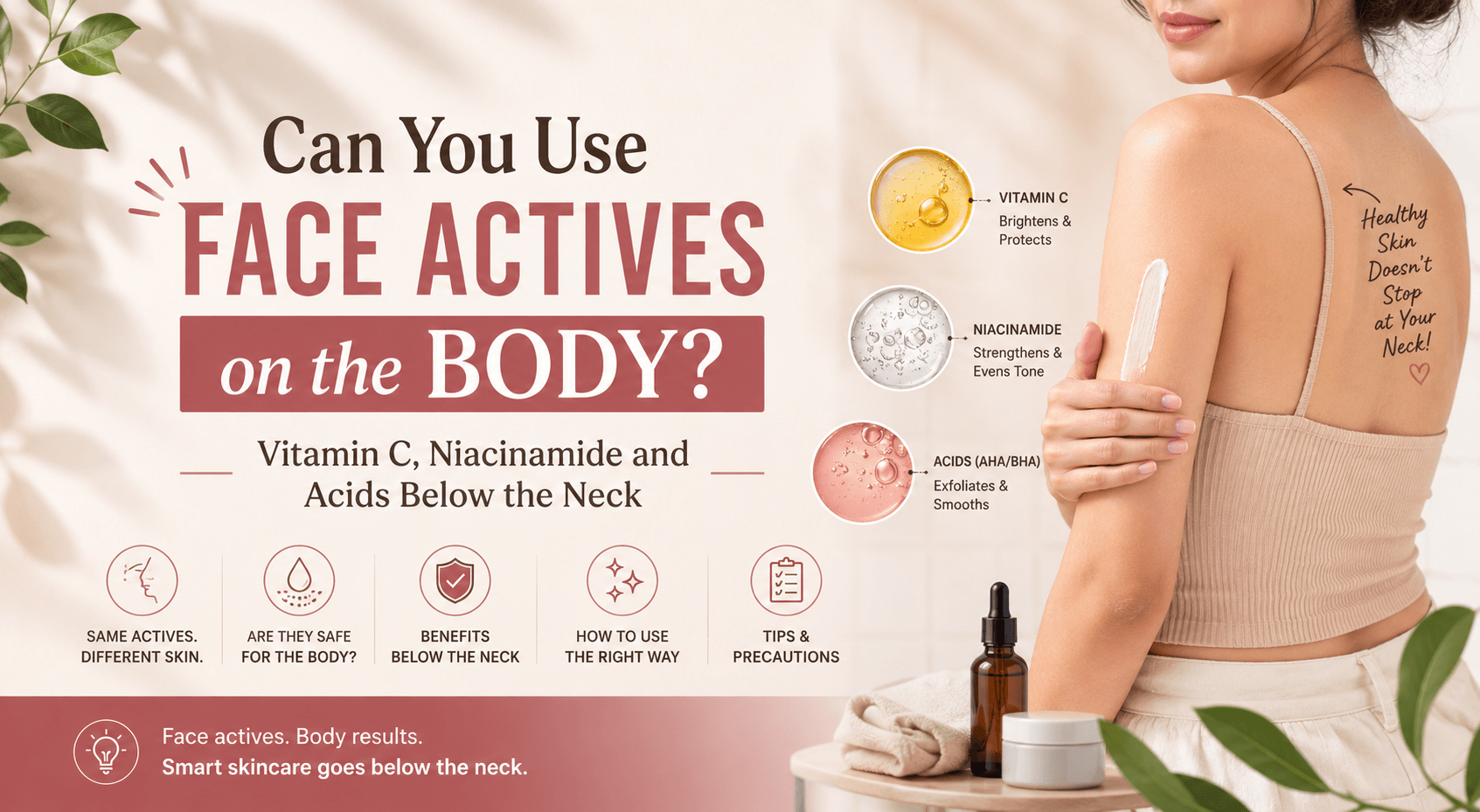
Face serums have made ingredients like Vitamin C, Niacinamide and Acids feel normal on the face—but what about the rest of the body? Indian users now routinely ask if their brightening serums, exfoliating toners, or pigment-correcting creams can also be used on dark neck, underarms, elbows, inner thighs and bacne marks.
The short answer: yes, you can use many face actives below the neck, but only if you respect differences between face and body skin, choose the right ingredients, and avoid over-layering. Body skin is thicker, more exposed to friction and sun, and covers a much larger area, so you need a slightly different rulebook.
Face vs Body Skin: Why the Rules Change
Face and body skin share the same basic structure, but in practice they live very different lives:
-The neck, underarms, elbows and inner thighs deal with friction, sweat and clothing rub.
-The back and shoulders deal with acne, ingrown hairs and trapped sweat.
-Large body areas get more mechanical irritation and, in India, more intense sun exposure.
This is why dermatology guides now explicitly mention acids and brighteners for dark neck, underarms and body pigmentation—but also insist on lower concentrations, less frequent use and better sunscreen below the neck.

Vitamin C & Shea Butter Sugar Body Scrub – For Bright, Smooth & Soft Skin
Vitamin C Below the Neck
Vitamin C is popular on the face for brightening and antioxidant protection. The same logic applies to the neck and chest: it can help with neck tan, chest pigmentation and overall glow, especially when paired with sunscreen.
Used correctly on the body, vitamin C can:
-Support brightening on dark neck and sun-exposed chest.
-Help with uneven tone and mild sun damage when layered under SPF.
But it comes with caveats:
-Vitamin C is acidic, so using it on irritated, freshly shaved, or friction-heavy areas (like underarms or inner thighs) can sting.
-Many sources advise not layering vitamin C with strong AHAs/BHAs on the same area, or at least spacing them by time of day, because of pH conflicts and irritation risk.
-So vitamin C below the neck makes the most sense on neck, chest and upper back, not necessarily on every friction spot.
Niacinamide on the Body
Niacinamide is one of the safest “face actives” to bring into body care. It helps fade hyperpigmentation, calm redness, improve barrier function and support texture, and is already used in many underarm and dark neck products.
Body-care uses include:
Dark neck and neck pigmentation routines, often combined with acids and brighteners.
Underarm and friction-zone pigmentation, because niacinamide is gentler than bleach-like solutions. WildOak’s underarm formulas and ingredient guide highlight niacinamide for this exact reason.
Post-acne marks on chest, back and shoulders.
Layering guidance often says niacinamide can work well with AHAs/BHAs, as long as pH and irritation are managed; some sources caution against casual mixing with vitamin C in the same step due to potential changes in efficacy, but many routines use them at different times of day.
For WildOak, niacinamide is the no-brainer “face-to-body” upgrade, especially in products like underarm brightening spray and body serums.
Acids Below the Neck (AHAs, BHAs, Kojic)
Your “Brightening Acids Below the Neck” piece already explains that face acids are moving onto the body for good reason: body skin gets tan, friction, acne and texture issues just as much as the face—sometimes more.
Below the neck, the most useful acids are:
-Lactic and mandelic acid – gentler AHAs that remove dead skin, improve texture and help fade surface pigmentation on neck, arms, thighs and underarms.
-Glycolic acid – stronger AHA used in controlled body formulations for roughness and pigmentation, but needs more caution on sensitive or deeper skin tones.
-Salicylic acid (BHA) – ideal for bacne, clogged pores on chest/back and KP‑like bumps.
-Kojic acid – a melanin-regulating brightener used widely in soaps and body washes for tan and dark patches.
Safety rules your acids article emphasises remain critical:
-Only use on healthy, unbroken skin—never on cuts, rashes, freshly shaved/waxed areas or sunburn.
-Start with lower concentrations and limited frequency, then increase slowly if tolerated.
-Always combine with moisturiser and sunscreen for exposed body areas, because acids raise photosensitivity.

5% Benzoyl Peroxide Acne Wash for Face & Body- Clears Body Acne Fast
Where Face Actives Make the Most Sense on the Body
If your readers are wondering “Can I just use my face serums on my body?”, the safest zones and concerns are:
Dark neck and neck tan – face-like acids and brighteners (lactic, mandelic, vitamin C, niacinamide, kojic) can be used carefully, with patch tests and strict SPF.
Underarms – niacinamide, mandelic/lactic acid, kojic acid, alpha arbutin in deodorant + brightening formulas are now standard for pigment + odour. WildOak’s underarm spray and roll-on are prime examples.
Elbows, knees, inner thighs – kojic acid, lactic/mandelic acid and niacinamide help with friction-related pigmentation and roughness when concentration and contact time are controlled.
Body acne and bacne marks – salicylic acid washes plus niacinamide or brightening agents are already used in many Indian routines.
In all these cases, face actives become body actives either by using body-specific products or by repurposing face formulas on limited areas with care.
Layering Face Actives on the Body: Simple WildOak Rules
To keep the article practical, you can offer a WildOak-style layering roadmap below the neck:
-One exfoliant at a time
-Use an AHA/BHA wash or lotion on a body area, not multiple strong acids together.

Kojic Acid Brightening Body Wash - Wildoak
Example: Kojic Acid Brightening Body Wash (with AHAs) on neck/back, plus plain moisturiser after.
-Niacinamide as the “buffer” active
-Layer niacinamide serums or lotions over or on alternate days with acids to support with strong acids on underarms or inner thighs.
-Moisturiser and sunscreen are non‑negotiable
-Always follow body actives with hydrating, fragrance-free moisturisers and apply SPF on exposed areas.
-Patch test before going full-body
-Start with a small patch on neck or arm before applying face actives widely on the body.
When Face Actives Should Not Be Used on the Body
It’s important to give clear “no-go” zones:
-Mucosal or internal intimate areas – brightening acids, vitamin C and strong actives should not be applied here; stick to external bikini-line and inner thigh only, and even there with caution.
-Very inflamed or medically driven dark neck – if the skin looks velvety, thick, or associated with conditions like acanthosis nigricans, dermatology sources recommend medical treatment instead of DIY acid stacking.
-Post-wax/shave raw skin – any acid or strong brightener can burn or worsen pigmentation if applied too soon after hair removal.
Readers should know that sometimes face actives are the wrong tool, and a dermatologist or gentler routine is the better move.
WildOak’s Answer: Face Actives, Rebuilt for the Body
Face actives like vitamin C, niacinamide and acids absolutely have a role below the neck—but they work best when reformulated for body needs: more area, more friction, more sun.
WildOak products (like Kojic Acid Soap, Kojic Acid Brightening Body Wash, and Underarm Brightening Spray) already take those actives and turn them into body-ready formats, with controlled strengths, soothing bases and simple routines.
-
Posted in
Body Care


