


Dark Groin Pigmentation: Hygiene Myths vs Real Medical Causes
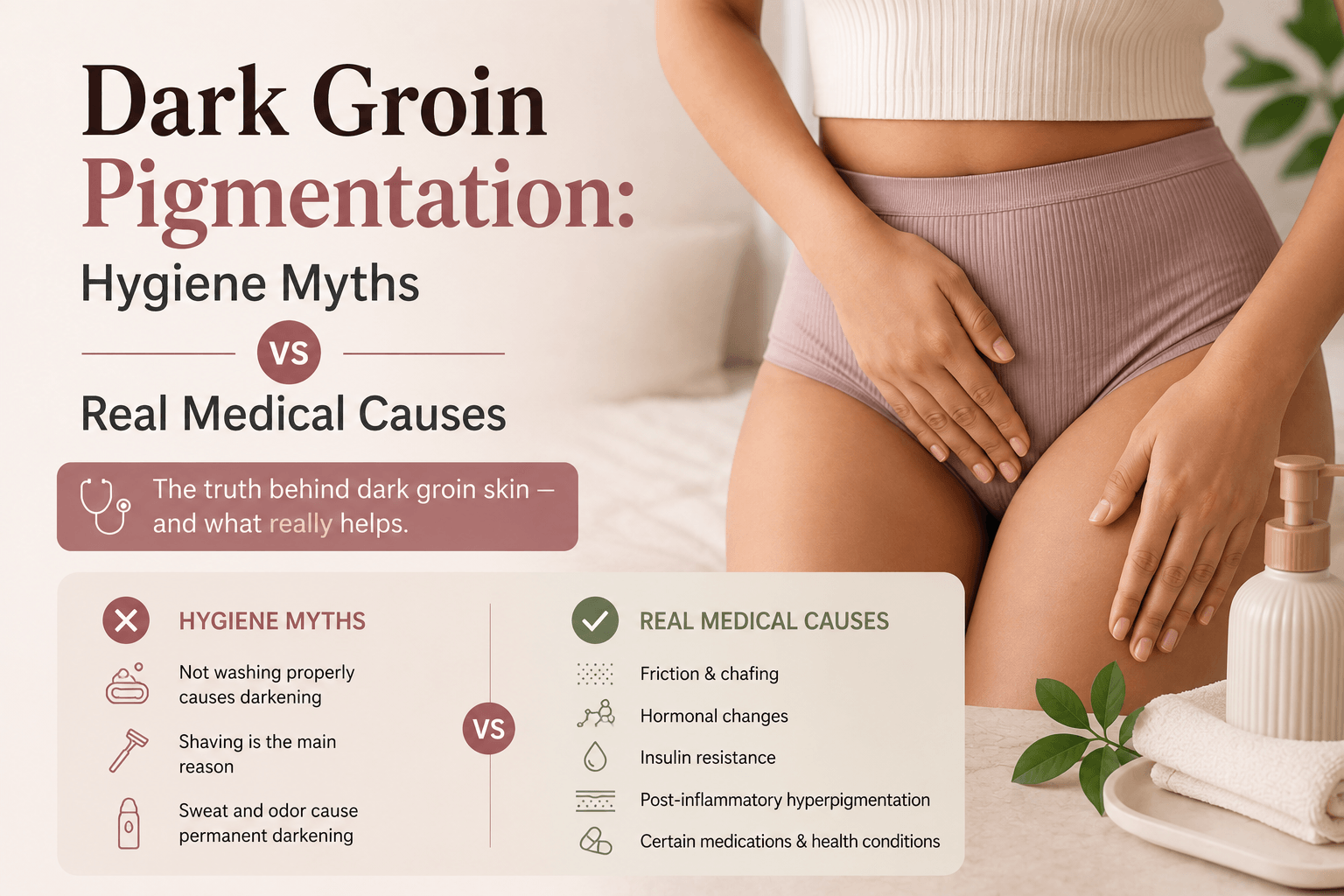
Dark groin and inner thigh pigmentation is one of those topics people judge harshly—but it is almost never about being “unclean”. It’s usually driven by friction, hormones, genetics, weight and sometimes medical conditions like insulin resistance and acanthosis nigricans.
Hygiene Myths: What Dark Groin Pigmentation Is Not
Dermatology clinics and body-skin educators repeatedly debunk the idea that dark inner thighs or groin equal poor hygiene.
Common myths:
-“Dark inner thighs mean you’re dirty.”
-“If you scrub more, the darkness will go away.”
-“Using strong soap every day will ‘clean off’ the colour.”
Reality:
-Expert sources explicitly state that intimate-area darkening is usually the result of friction, melanin biology, hormones and sometimes health conditions—not dirt.
-It’s normal for pubic and groin skin to be darker than the rest of the body; melanocytes there are more active and more hormone-sensitive.
-Overwashing and harsh scrubbing often worsen pigmentation instead of fixing it.

Real Everyday Causes: Friction, Clothing and Hair Removal
The most common everyday cause across derm and clinic content is friction and chafing.
-Skin-on-skin friction: Inner thighs rubbing together while walking, running or sitting cross‑legged.
-Clothing friction: Tight jeans, leggings, shapewear or synthetic underwear that constantly rub the area.
-Sweat and moisture: Heat and humidity trap sweat in folds, increasing irritation and post‑inflammatory hyperpigmentation.
-Hair removal trauma: Frequent shaving, waxing or depilatories causing micro‑cuts and inflammation, leading to lingering marks.
This repeated irritation activates melanocytes and leads to hyperpigmentation, even when hygiene is perfectly fine.
People with overweight or obesity experience more friction and are therefore more prone to dark inner thighs—again, a mechanical effect, not a cleanliness issue.

Kojic Acid Brightening Body Wash - Wildoak
Hormones and Normal Anatomy
Hormones and natural anatomy also play a big role in groin pigmentation.
Evidence from derm and women’s health sources shows:
-A slightly darker pubic region is absolutely normal; colour fluctuations there are caused by age, hormones, pregnancy, and natural variation, not poor hygiene.
-Puberty, pregnancy, PCOS and menopause can increase pigmentation in the pubic region and inner thighs as hormone levels change.
-Hormonal fluctuations can cause hyperpigmentation in skin folds like inner thighs, groin and underarms more frequently in women.
-So if your groin and inner thighs are darker, that often reflects how your melanocytes respond to hormones, not how often you bathe.

Perfume Shea Butter Sugar Scrub
Systemic Health Causes: Acanthosis Nigricans and More
Sometimes dark groin pigmentation is part of a larger health story. Conditions like acanthosis nigricans show up as dark, velvety plaques in folds—neck, armpits, groin—and are strongly linked to insulin resistance and metabolic issues.
Key facts:
-Acanthosis nigricans is commonly associated with diabetes, obesity and insulin resistance, and can rarely signal internal malignancy.
-It often appears as dry, thickened, velvety dark patches in areas such as the neck, armpits and groin, not just simple flat tan.
-Dark inner thighs can also be linked to conditions needing medical care, including diabetes, fungal infections or certain genetic diseases.
Red flags that suggest a medical cause rather than just friction:
-Rapid onset and spreading dark areas.
-Velvety, thickened texture.
-Patches in multiple folds (neck + underarms + groin).
Associated symptoms: fatigue, weight changes, irregular periods, family history of diabetes.
In those cases, more soap won’t help; you need a doctor to check insulin, hormones and underlying health.
Why Over-Cleaning and Whitening Hacks Backfire
Believing the hygiene myth often leads people to over-clean the area:
-Scrubbing with loofahs, pumice stones or rough scrubs.
-Using harsh detergents or strong soaps multiple times a day.
-DIY “whitening” hacks like lemon, baking soda and undiluted vinegar on delicate skin.
-Body-skin and medical guides warn that this over-cleansing and abrasion:
-Damages the skin barrier and increases irritation.
-Triggers more post‑inflammatory hyperpigmentation.
Raises the risk of micro‑tears, infection and persistent darkening.
Cleanliness is important—but gentle, pH-balanced cleansing once or twice a day is enough. More friction and more harsh chemistry usually means more pigmentation, not less.
Simple Rule of Thumb: Hygiene vs Health
For a WildOak blog, you can give readers a clear checklist:
-More likely “normal + friction” (skincare route):
-Mild to moderate darkness.
-Flat pigmentation mainly where thighs rub or clothes press.
-Linked to weight, tight clothing, sweating or shaving.
-No major change in texture or systemic symptoms.
More likely “systemic health sign” (doctor route):
-Very dark, velvety or thickened patches.
-Spread to multiple folds (neck, armpits, groin).
-Sudden onset or rapid progression.
Coexisting issues like obesity, suspected diabetes, PCOS or family history of metabolic disease.
This reframes dark groin pigmentation from shame and over-scrubbing to proper friction management, hormone awareness and health checks when necessary.
Closure
Dark groin and inner thigh pigmentation is not about hygiene failure; it’s a mix of friction, hormones, melanin biology and sometimes systemic health.
Skincare should focus on gentle cleansing, reducing friction, and safe brightening on external skin, not punishing scrubs or risky bleaching.
If pigmentation looks velvety, spreads, or comes with other health signs, skincare is supportive—but a dermatologist or physician needs to be part of the conversation.
FAQ Block for “Dark Groin Pigmentation: Hygiene Myths vs Real Medical Causes”
Ques. 1. Does dark groin pigmentation mean I have poor hygiene?
Ans. 1. No. Dermatology sources clearly state that dark inner thighs and groin are usually caused by friction, melanin biology, hormones and sometimes metabolic conditions—not by being dirty or not washing enough.
Ques. 2. Why are my private area and inner thighs darker than the rest of my body?
Ans. 2. It is normal for the pubic region and inner thighs to be darker because melanocytes there are more active and responsive to hormones. Colour can also deepen with age, puberty, pregnancy, PCOS and friction from clothing or thighs rubbing together.
Ques. 3. Can scrubbing or using stronger soap remove dark groin pigmentation?
Ans. 3. Harsh scrubbing and strong soaps can irritate delicate groin skin and often make pigmentation worse by triggering post-inflammatory hyperpigmentation. Experts recommend gentle, pH-balanced cleansing and avoiding abrasive DIY hacks like lemon and baking soda.
4. What everyday factors cause dark inner thighs and groin?
Ans. 4. The main everyday factors are friction and chafing (skin-on-skin or fabric), tight clothing, sweat and moisture trapped in folds, and repeated hair removal trauma from shaving or waxing, all of which can irritate the skin and lead to darker patches over time.
Ques. 5. When is dark groin pigmentation a sign of a medical condition?
Ans. 5. Dark, velvety or thickened patches in the groin and other folds (such as neck and armpits) can be signs of acanthosis nigricans or other conditions linked to insulin resistance, obesity, diabetes or hormonal issues. Rapid changes or spreading patches warrant a medical check-up.
Ques. 6. What should I do if I’m worried about dark groin pigmentation?
Ans. 6. If your groin and inner thigh darkness is mild and clearly linked to friction or shaving, focus on gentler care and reducing irritation. If the pigmentation is severe, velvety, spreading or associated with symptoms like fatigue, weight changes or irregular periods, consult a dermatologist or doctor to rule out underlying health conditions.


